
SEE IT. DOUBT IT. CHECK IT.
Campaign against the spread of misinformation
SEE IT. DOUBT IT. CHECK IT.
Campaign against the spread of misinformation
SEE IT. DOUBT IT. CHECK IT.
Campaign against the spread of misinformation
Context
01/05
Context
01/05
Context
01/05
See It. Doubt It. Check It. is a guerrilla-style awareness campaign that explores how misinformation spreads and why it is so easy to believe. In a world filled with constant media, fast-moving headlines, and attention-driven platforms, information is often consumed quickly and without verification. This environment makes people especially vulnerable to emotionally charged and misleading content.
See It. Doubt It. Check It. is a guerrilla-style awareness campaign that explores how misinformation spreads and why it is so easy to believe. In a world filled with constant media, fast-moving headlines, and attention-driven platforms, information is often consumed quickly and without verification. This environment makes people especially vulnerable to emotionally charged and misleading content.
See It. Doubt It. Check It. is a guerrilla-style awareness campaign that explores how misinformation spreads and why it is so easy to believe. In a world filled with constant media, fast-moving headlines, and attention-driven platforms, information is often consumed quickly and without verification. This environment makes people especially vulnerable to emotionally charged and misleading content.
Problem
02/05
Problem
02/05
Problem
02/05
Psychologically, fake news works because it appeals to emotion rather than logic. Headlines are designed to provoke fear, anger, or agreement and bypass critical thinking. We have a tendency to believe information that aligns with what we already think, we’ve heard of it before or if the information is easy to process. This campaign responds to that reality by imitating the tactics of misinformation rather than simply warning about it.
Psychologically, fake news works because it appeals to emotion rather than logic. Headlines are designed to provoke fear, anger, or agreement and bypass critical thinking. We have a tendency to believe information that aligns with what we already think, we’ve heard of it before or if the information is easy to process. This campaign responds to that reality by imitating the tactics of misinformation rather than simply warning about it.
Psychologically, fake news works because it appeals to emotion rather than logic. Headlines are designed to provoke fear, anger, or agreement and bypass critical thinking. We have a tendency to believe information that aligns with what we already think, we’ve heard of it before or if the information is easy to process. This campaign responds to that reality by imitating the tactics of misinformation rather than simply warning about it.
Research
03/05
Research
03/05
Research
03/05
My research into the psychology and mechanics of fake news directly informed the final outcome. By understanding how misinformation spreads and why it feels convincing, I designed an experience that allows the audience to feel the manipulation before recognizing it.
My research into the psychology and mechanics of fake news directly informed the final outcome. By understanding how misinformation spreads and why it feels convincing, I designed an experience that allows the audience to feel the manipulation before recognizing it.
My research into the psychology and mechanics of fake news directly informed the final outcome. By understanding how misinformation spreads and why it feels convincing, I designed an experience that allows the audience to feel the manipulation before recognizing it.
Content
04/05
Content
04/05
Content
04/05
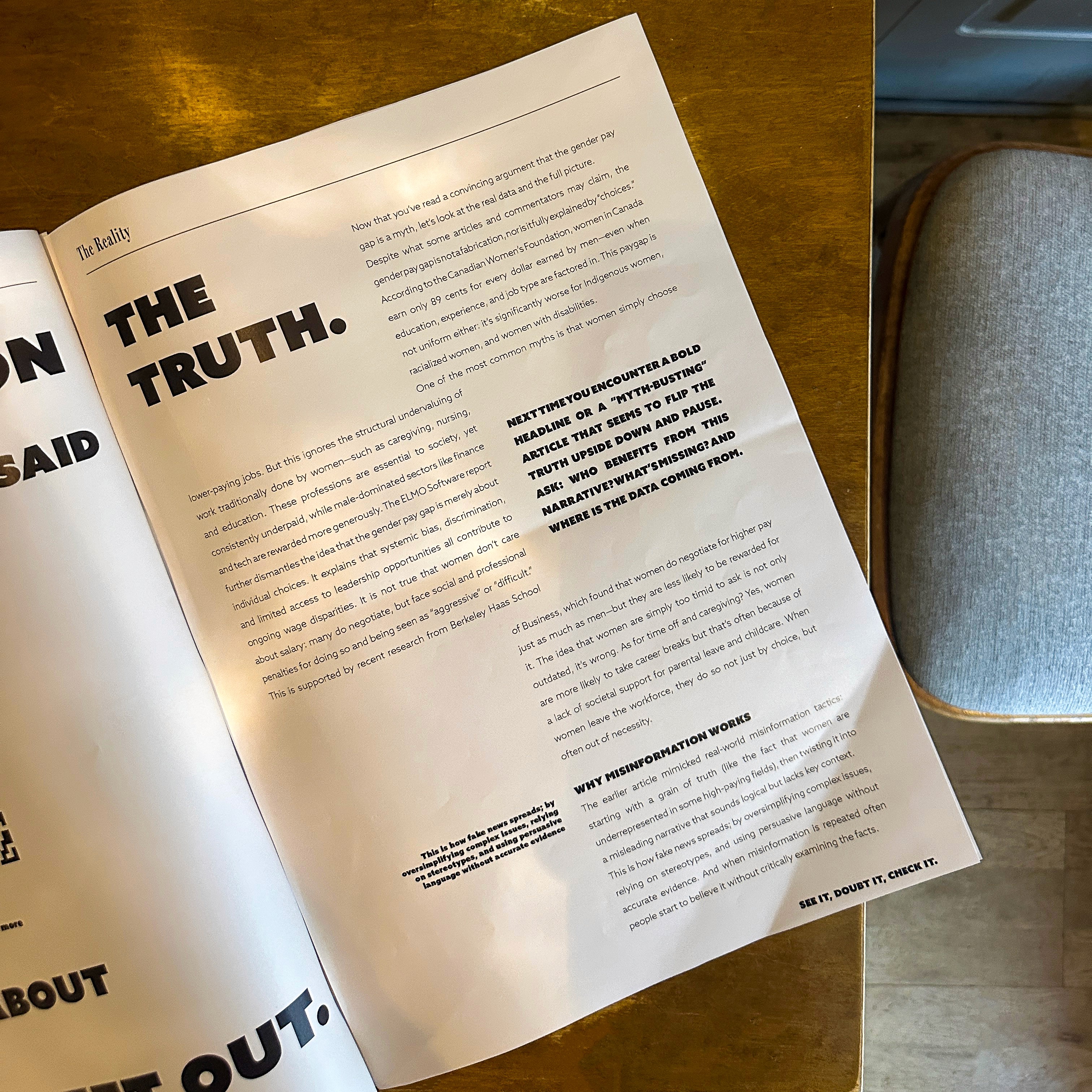
The campaign communicates through three interconnected formats: clickbait posters, a fake newspaper, and a digital landing page. The posters and newspapers present bold, misleading headlines placed in public spaces, mimicking how misinformation appears unexpectedly in everyday life. The fake newspaper, in particular, plays with the trust we place in traditional media formats before revealing that the content was intentionally deceptive.
The campaign communicates through three interconnected formats: clickbait posters, a fake newspaper, and a digital landing page. The posters and newspapers present bold, misleading headlines placed in public spaces, mimicking how misinformation appears unexpectedly in everyday life. The fake newspaper, in particular, plays with the trust we place in traditional media formats before revealing that the content was intentionally deceptive.
The campaign communicates through three interconnected formats: clickbait posters, a fake newspaper, and a digital landing page. The posters and newspapers present bold, misleading headlines placed in public spaces, mimicking how misinformation appears unexpectedly in everyday life. The fake newspaper, in particular, plays with the trust we place in traditional media formats before revealing that the content was intentionally deceptive.
Misinformation Posters
Misinformation Posters
Misinformation Posters


Fake Newspaper
Fake Newspaper
Fake Newspaper




Misinformation Website
Misinformation Website
Misinformation Website
Conclusion
05/05
Conclusion
05/05
Each physical element includes a QR code that leads to a website explaining how fake news works and how to verify information. This shift from confusion to clarity turns passive viewers into active participants and encourages critical media literacy.
By combining physical and digital design, the campaign guides audiences through a journey of attention, doubt, and understanding, using design as a tool to challenge habits and promote awareness in an age of information overload.
Each physical element includes a QR code that leads to a website explaining how fake news works and how to verify information. This shift from confusion to clarity turns passive viewers into active participants and encourages critical media literacy.
By combining physical and digital design, the campaign guides audiences through a journey of attention, doubt, and understanding, using design as a tool to challenge habits and promote awareness in an age of information overload.